How to Automate Personalized Promotions in Retail with AI
Automating personalized promotions in retail saves time, enhances customer experience, and drives sales.
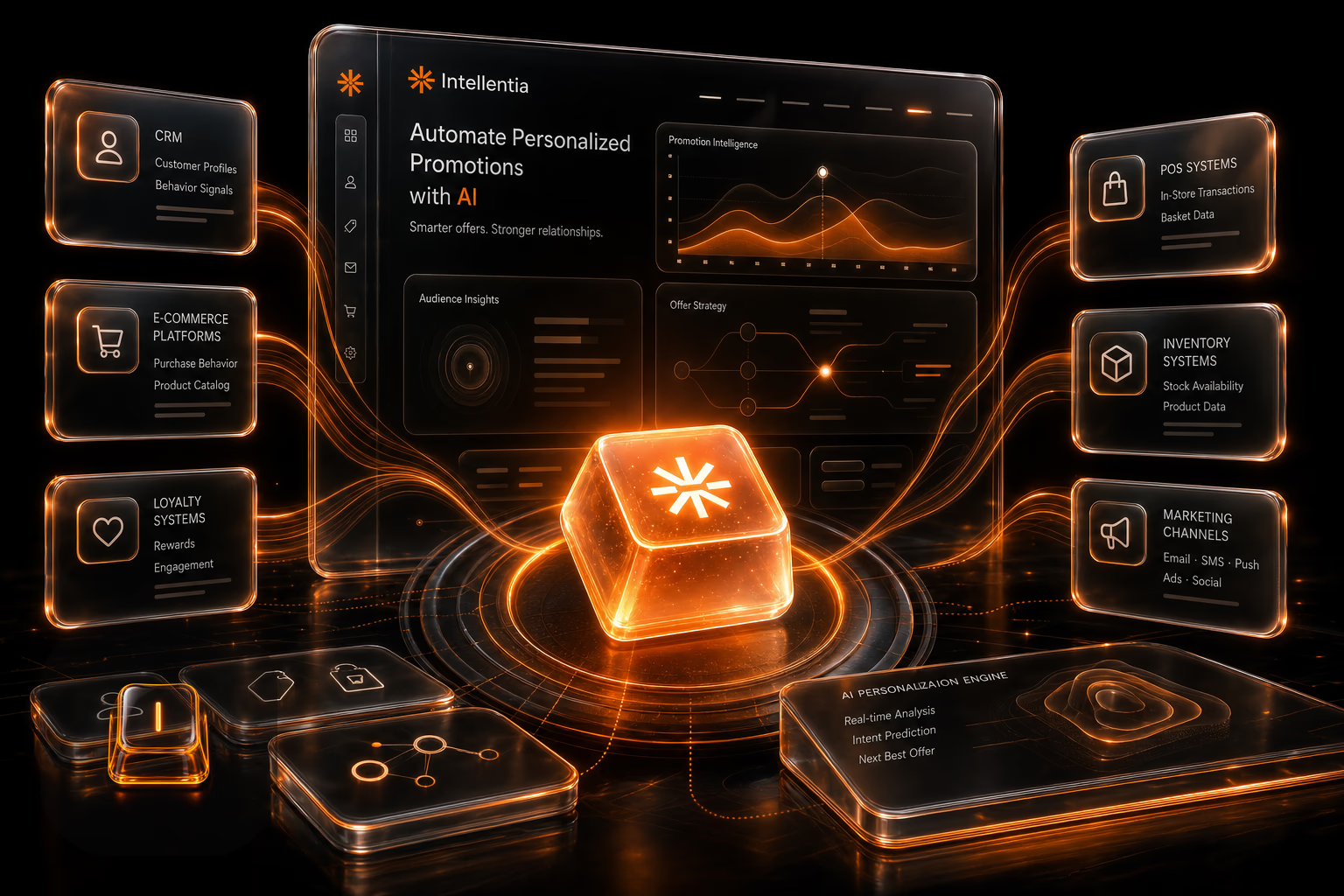
Automating personalized promotions in retail enables businesses to deliver unique customer experiences while optimizing costs and resources.
Why should you consider automating promotions in retail?
In retail, personalized promotions are supposed to attract and keep customers, but doing it by hand is a slow, error-prone process. You end up sending generic offers that don't land. We build systems that use AI to analyze customer data—purchase history, browsing behavior, everything—to create and send promotions that are actually relevant. This isn't about spamming discounts; it's about precision targeting that boosts engagement and sales.
- Improved customer segmentation accuracy.
- Reduced time and operational resources.
- Higher conversion rates for promotions.
How does AI-driven promotion automation work?
What we see when we build this in real businesses is a clear, three-step architecture. First, we consolidate your data from different silos: your CRM, your e-commerce platform, even in-store POS systems. Second, we build and train a predictive model on this unified dataset to identify purchasing patterns and predict what a specific customer is likely to buy next. Finally, the system automatically generates and sends the right offer through the right channel, whether that's email, your app, or a push notification. It’s a closed loop.
| Step | Description |
|---|---|
| Data Collection | Customer data from CRM, e-commerce, etc. |
| Predictive Analysis | AI models to identify purchasing patterns. |
| Promotion Generation | Design and delivery of personalized offers. |
What AI tools are used in retail?
The tech stack for this isn't magic. For the core predictive modeling, we typically use battle-tested machine learning libraries like TensorFlow or PyTorch. For the delivery part, we integrate with the marketing automation tools you already use, like HubSpot or Klaviyo. The real work—and where most DIY projects fail—is in the integration. Making these systems talk to each other reliably is what makes the automation actually work. That's the core of the engineering.
The success of automation relies on solid integration between predictive analytics and communication channels.— Intellentia team
What is the time and cost to implement AI for promotions?
What people ask us every week is, 'How long and how much?' The honest answer depends on the state of your data and the complexity of your business. If your data is clean and accessible, we can often build a first version in 3 to 6 months. The investment reflects the engineering work required, but the ROI is straightforward: you stop wasting money on ineffective promotions and see a direct lift in sales and customer loyalty. It pays for itself.
What does this mean for your business?
Ultimately, automating your promotions isn't about chasing a tech trend. It's about building a more efficient, intelligent sales engine for your retail business. You create a system that directly improves customer experience, drives revenue, and stops you from burning resources on guesswork. It's a foundational upgrade.
FAQ
Do I need an in-house technical team to implement AI?
How is the success of automated promotions measured?
Also on Intellentia: our solutions · real cases · request a demo
Read more: TensorFlow · Klaviyo
Keep reading: How to Automate Upselling in Restaurants with AI · How to Automate Dynamic Menus in Restaurants with AI · How to Automate Post-Purchase Surveys in Retail · How to Automate Shift Management in Hospitality with AI · How to Automate Table Assignment in Restaurants with AI