How to Deploy an AI Agent for Cross-Selling in Physical Stores
Enhance cross-selling in your physical store with an AI agent. We explain the process, tools, and benefits with concrete examples.
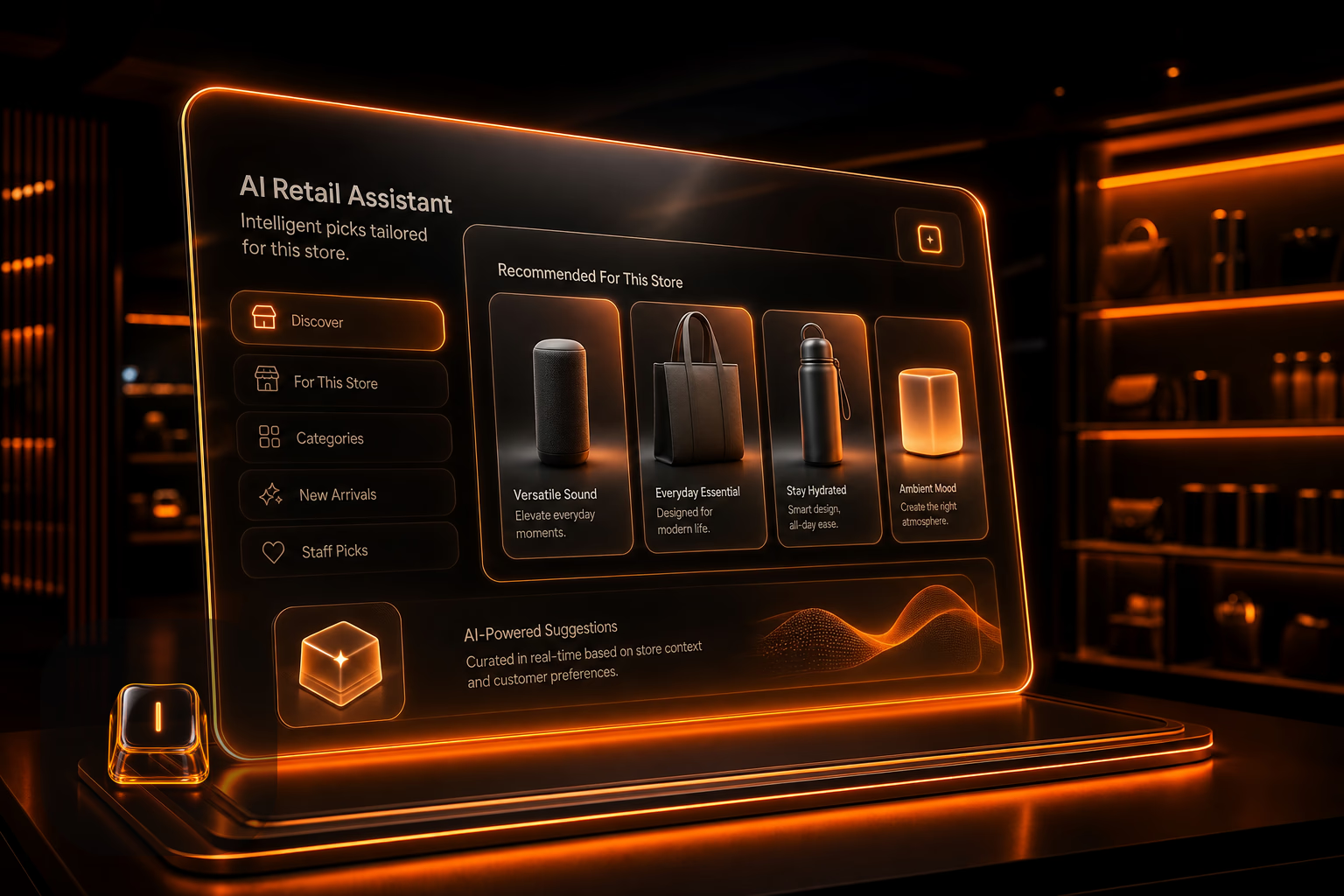
An AI agent for cross-selling can transform customer experience in physical stores, increasing revenue and loyalty.
What is an AI agent for cross-selling?
Let's be clear about what this is. We build an AI agent that uses your own data—sales history, inventory, customer profiles—to make smart product recommendations in real time. It's not magic. The system suggests complementary items at the point of sale, whether on a screen, through a mobile app, or as a prompt for your sales staff. The whole point is to increase the value of each sale by being genuinely helpful to the customer.
How does an AI agent work in retail?
When we build one of these agents, the architecture has three core layers. First, data ingestion. We need to pull data from wherever it lives: your POS system, your CRM, loyalty program database, even in-store sensors if you have them. Second, the brain. This is a machine learning model we train specifically on your data to find non-obvious buying patterns. Third, the delivery mechanism. The model's recommendations have to go somewhere, so we pipe them to a customer-facing screen, your cashier's terminal, or a staff mobile app. It has to be seamless.
Practical example: clothing store
Here’s a real-world example from a clothing store we worked with. A customer picks up a specific leather jacket. The system instantly checks their purchase history (if they're a loyalty member) and sees they've bought items from a particular brand before. It also cross-references current inventory for high-margin accessories that are often bought with leather jackets. The result? A prompt on the cashier's screen says: 'Suggest the merino wool scarf [SKU #12345]. It's a high-probability pairing.' It's specific, data-driven, and easy for staff to execute.
What does it cost to implement this solution?
What people ask us every week is, 'What's the price tag?'. The cost depends entirely on the complexity of the integration and the data sources we need to connect. For a mid-sized business, a custom-built solution typically starts in the €10,000-15,000 range. That covers the initial data pipeline engineering, model training, and integration with your existing systems. It's not an off-the-shelf plugin. It's a piece of core infrastructure built for you, and yes, you need to factor in ongoing maintenance and model retraining.
When we see this implemented correctly, the impact on average ticket size is consistently between 10% and 30%. The key is 'implemented correctly'—it's not automatic.
What tools and technologies are needed?
Our typical stack for this kind of project is pragmatic and robust. We start with your existing data systems, usually a CRM or ERP, which serve as the source of truth. The core recommendation engine is built with proven ML libraries like PyTorch or TensorFlow, running on a cloud backend (AWS, GCP, Azure—whichever you prefer). The final piece is the API that connects this brain to your frontend, whether it's a POS terminal or a custom app. The integrations are the hardest part and where most DIY projects fail; getting clean, real-time data flow is non-negotiable.
What does this mean for your business?
Ultimately, building an AI cross-selling agent is about making your existing data work for you to drive revenue. It's a system that turns historical sales into future opportunities, right at the point of purchase. It's a technical project, but the outcome is purely commercial: higher average transaction value and more relevant customer interactions. If you have the data and want to put it to use, we can build the engine that does it.
FAQ
Is a CRM necessary to implement an AI agent?
How long does it take to deploy such a solution?
Also on Intellentia: what we do · our solutions · real cases
Read more: TensorFlow official documentation · cross-selling studies in retail · machine learning guide
Keep reading: How to Implement an AI Agent for Personalized Recommendations in Your Store · How to Deploy an AI Agent for Incident Management · How to Deploy an AI Agent for Quoting in Service Businesses · Implementing an AI Agent for Upselling in Online Stores · AI Agents for Managing Returns in Physical Stores