AI Agents for Managing Returns in Physical Stores
How AI agents can transform return management in physical stores, reducing costs and improving customer experience.
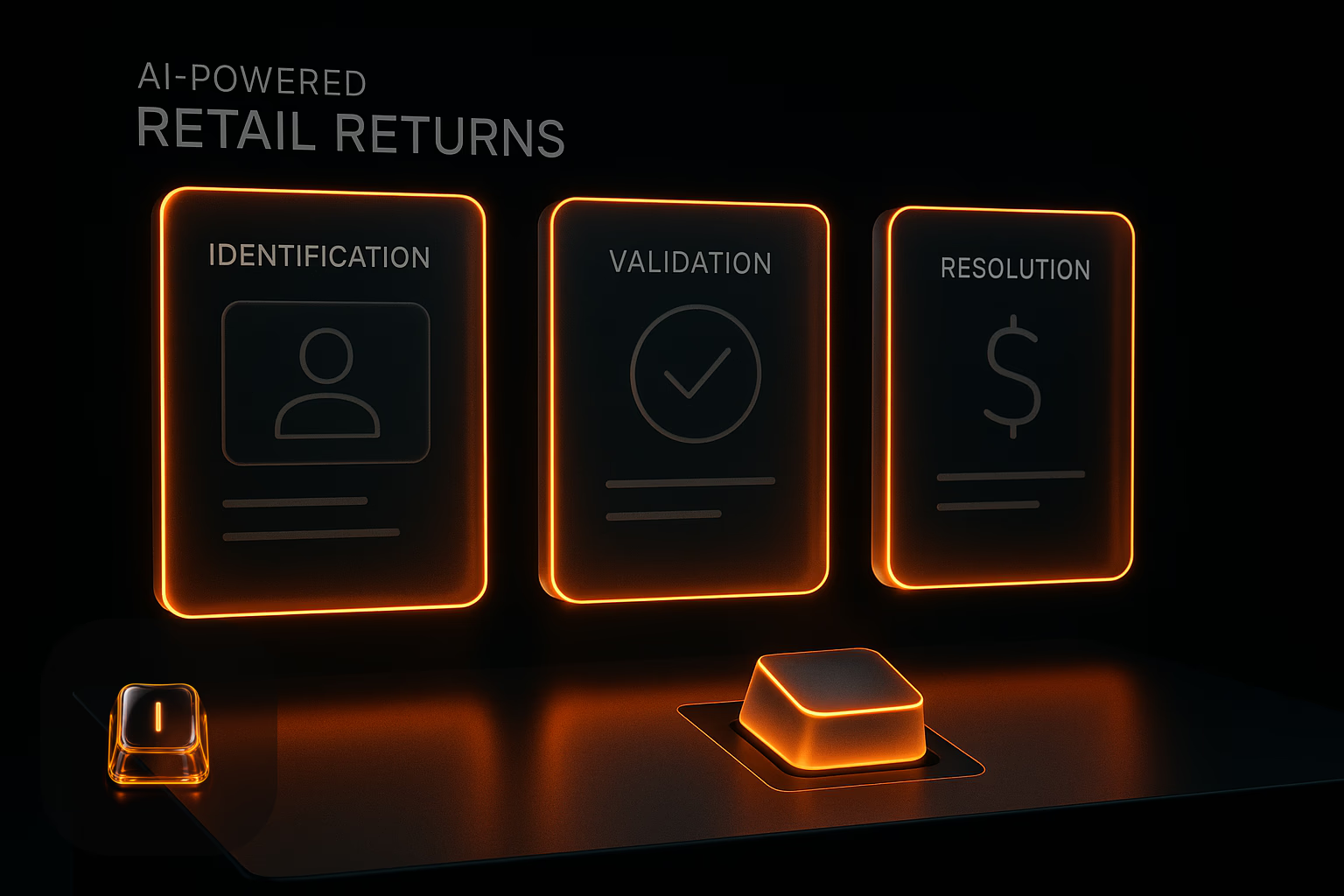
An AI agent for returns optimizes the process in physical stores, reducing errors and wait times for an enhanced customer experience.
What is an AI agent for returns in retail?
Think of a returns agent as a piece of software that connects your point-of-sale, your inventory system, and your CRM. We build it to automate the entire returns process, from the moment a customer walks up to the counter. The goal is to free up your staff and give the customer a clear, fast answer without the usual back-and-forth.
In practice, here's what happens: the agent scans the receipt's barcode. It instantly pulls the transaction, checks your store's return policy (Is it within 30 days? Is it a final sale item?), and confirms the product is in the right condition. Based on those rules, it processes the refund or exchange right there. No manual lookups. No mistakes.
How does an AI agent for returns work?
When we build one of these agents, the logic follows a simple, robust workflow. It's always three steps: identify, validate, and resolve. Let's break down what that actually means for your store.
- Identification: The customer presents the product along with their receipt. The agent scans the ticket or QR code to locate the information in the system.
- Validation: The agent checks that the return complies with the store's policies (timeframe, product condition, etc.).
- Resolution: Depending on the case, the agent authorizes a refund, generates a credit note, or facilitates a product exchange.
What we see when we build this in real businesses is that you suddenly get clear answers to important questions. Are customers in one city returning a specific shirt model because of a defect? Is a promotion causing a spike in returns a week later? This data helps you fix the root cause, not just handle the symptom.
What tools and technologies are required?
To get this running, we need to connect a few core systems. This isn't about reinventing the wheel; it's about making your existing tools talk to each other intelligently. Here's the typical tech stack we work with:
- Connected point-of-sale (POS) system.
- Inventory management software.
- Natural Language Processing (NLP) models if conversational interfaces are included.
- CRM integration to log interactions and relevant customer data.
Architecturally, we have two paths. We can build a custom integration that plugs directly into your current setup, which gives you maximum control. Or, we can use a more standardized, cloud-based approach. The right choice depends entirely on your existing infrastructure and how much customization you need. A straightforward implementation for a few stores usually falls in the $10,000 to $25,000 range. It's an investment in process, not just tech.
What are the benefits for your business?
Once the agent is live, the benefits show up in two places: your bottom line and your customer reviews. Here’s what our clients consistently report:
- Reduced customer wait times.
- Minimized human errors in the process.
- Optimized inventory through collected data.
- Enhanced customer experience, boosting loyalty.
We've measured it: a well-built agent cuts the time an employee spends on a single return by up to 40%.
What does this mean for your business?
Ultimately, this isn't just about a slicker returns desk. It’s about turning a costly, frustrating process into a smooth, data-rich operation. If you're tired of returns being a bottleneck and are ready to build a system that actually works for your staff and your customers, it's time to talk about a proper implementation.
FAQ
How long does it take to implement an AI agent for returns?
Do I need to replace my POS system to use this technology?
Also on Intellentia: what we do · our solutions · real cases
Read more: official model documentation · European AI regulation
Keep reading: Implementing an AI Agent for Upselling in Online Stores · AI Agents for Email Response: How to Implement Them · AI Agent for Customer Service: Practical Implementation · How to Deploy an AI Agent for Quoting in Service Businesses · What is an AI Sales Copilot (and How to Implement It)