What is AI Agent Orchestration and How to Use It
Coordinating multiple AI agents to tackle complex tasks is now feasible. Here's how it works and how it can benefit your business.
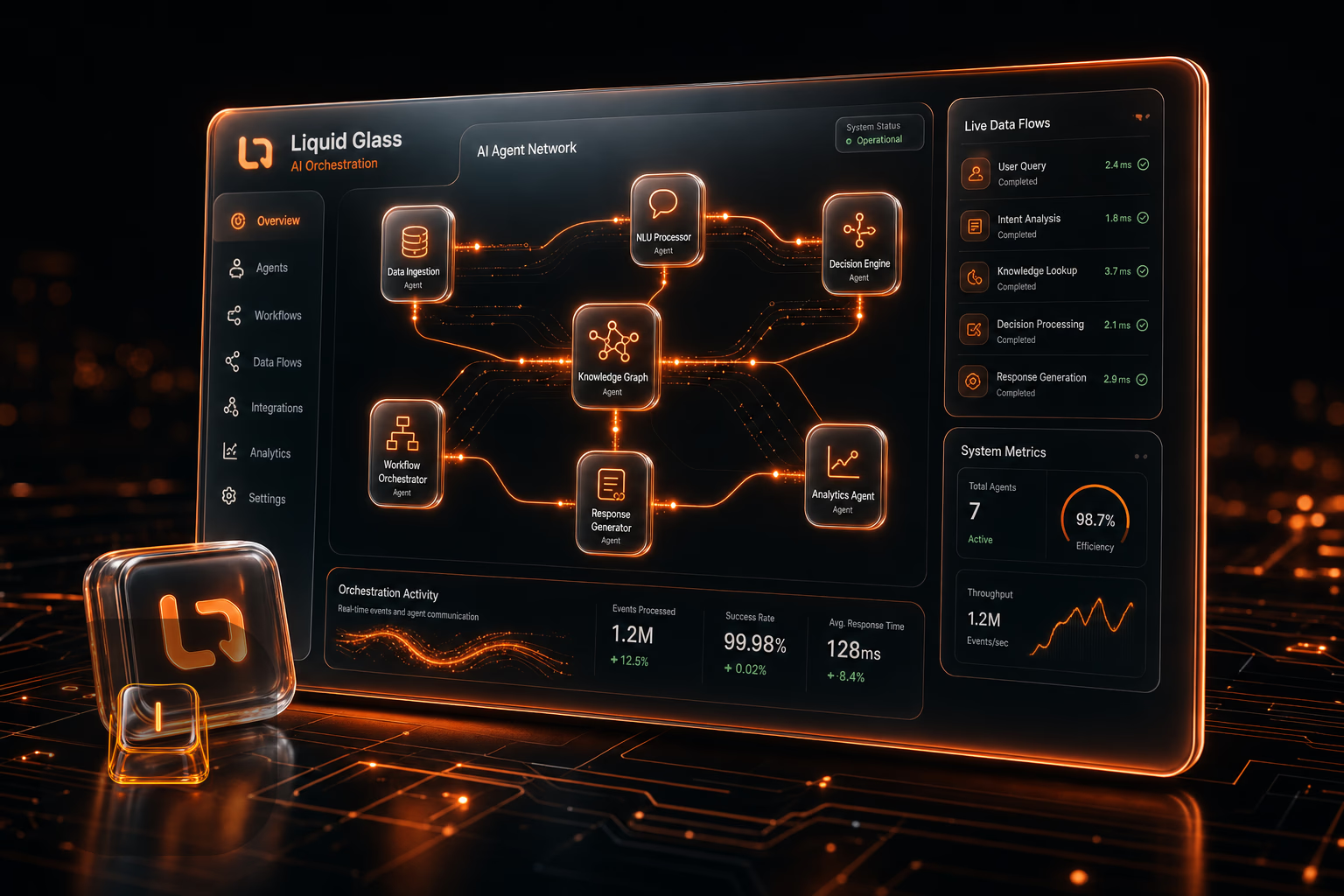
AI agent orchestration involves coordinating multiple autonomous systems to efficiently address complex tasks. It's an advanced solution that many brands are leveraging to optimize processes.
What is AI agent orchestration?
We define AI agent orchestration as the framework for making multiple, specialized AIs work together on a single, complex business goal. Think of it as a project manager coordinating a team of human experts: you have a data analyst, a copywriter, and a logistics specialist. Each is an 'agent' with a specific skill, and orchestration is the system that makes them collaborate effectively. These agents aren't just chatbots; they can be anything from a dynamic pricing algorithm to a fraud detection model. It's about teamwork.
Let's use an e-commerce example we often build. One AI agent analyzes user behavior to generate personalized product recommendations. A second agent monitors real-time inventory and warehouse data. A third handles initial customer support queries. Without orchestration, these are just isolated tools. With it, the recommendation agent won't suggest out-of-stock items because it's communicating with the inventory agent. That's how you build a cohesive, intelligent operation.
How do multi-agent systems work in practice?
So how does this work under the hood? Each agent is given a very specific job description and a clear objective. The secret sauce is the 'orchestrator'—a central AI that acts as the team lead or the conductor of an orchestra. It doesn't do the work itself, but it assigns tasks, ensures agents share information correctly, and steps in to resolve conflicts or prioritize work. This central brain is what turns a group of individual AIs into a powerful, coordinated system.
- Each agent has a defined role (e.g., data analysis, prediction, user interaction).
- The central orchestrator manages communications and ensures alignment.
- Decisions are made in a decentralized manner but with centralized oversight.
What are the benefits of agent orchestration for your business?
What people ask us every week is, 'Why not just use one giant AI model for everything?' The answer is specialization. A single, monolithic AI struggles with complex, multi-step business processes. By using a team of specialized agents, we can build systems that are more robust, flexible, and efficient. Here’s what that actually means for your business:
- Increased efficiency in complex processes like logistics or customer support.
- Flexibility to integrate new agents as business needs evolve.
- Error reduction through task specialization by each agent.
Having multiple AIs is easy. Making them work together toward a single business goal is where the real value is created. That's orchestration.
How much does it cost to implement an agent orchestration system?
The cost to build a custom agent orchestration system depends entirely on the complexity of the problem we're solving. A simple two-agent system for internal reporting is different from a five-agent system managing live customer logistics. To give you a ballpark, initial projects typically range from $20,000 to $50,000. This is driven by the number of agents, the data integrations required, and the sophistication of the central orchestrator.
We see this as an investment in core operational infrastructure, not a simple software expense. The return comes from automating high-value tasks, reducing costly errors, and creating a system that can grow with you. The beauty of this architecture is its scalability; we can start by automating one critical workflow and then expand the system's capabilities over time. You don't have to boil the ocean on day one.
Where should you start with agent orchestration?
The right place to start isn't with the technology, it's with the business problem. We begin by mapping out your key processes to find the bottlenecks—the points where multiple manual steps, complex decisions, or different software tools have to come together. These are prime candidates for a multi-agent system, whether it’s in supply chain management, personalized marketing, or complex financial analysis.
Once we've identified the target process, we design the system. This means selecting or building the right specialized agents for each sub-task and, crucially, engineering the central orchestrator that will act as the brain. It's a bespoke solution, not an off-the-shelf plugin. This is exactly where a technical team keeps you from getting burned, ensuring the architecture is sound from day one.
FAQ
What types of agents can be included in an orchestration system?
Do I need an in-house tech team to maintain an orchestration system?
Also on Intellentia: what we do · our solutions · real cases
Read more: Intelligent Systems Journal · OpenAI official documentation
Keep reading: What is RAG and How to Use it in Your SMB · What is Generative AI and How It Can Transform Your SMB · How to Deploy an AI Agent for Managing Hospitality Bookings · Multi-Agent Systems to Optimize Retail Inventory · How to Automate Cancellation Management in Restaurants