KPMG pulls AI report over 'hallucinations': lessons for your business
KPMG's decision to pull a report highlights the risks of using AI without proper oversight. Here's what you need to know.
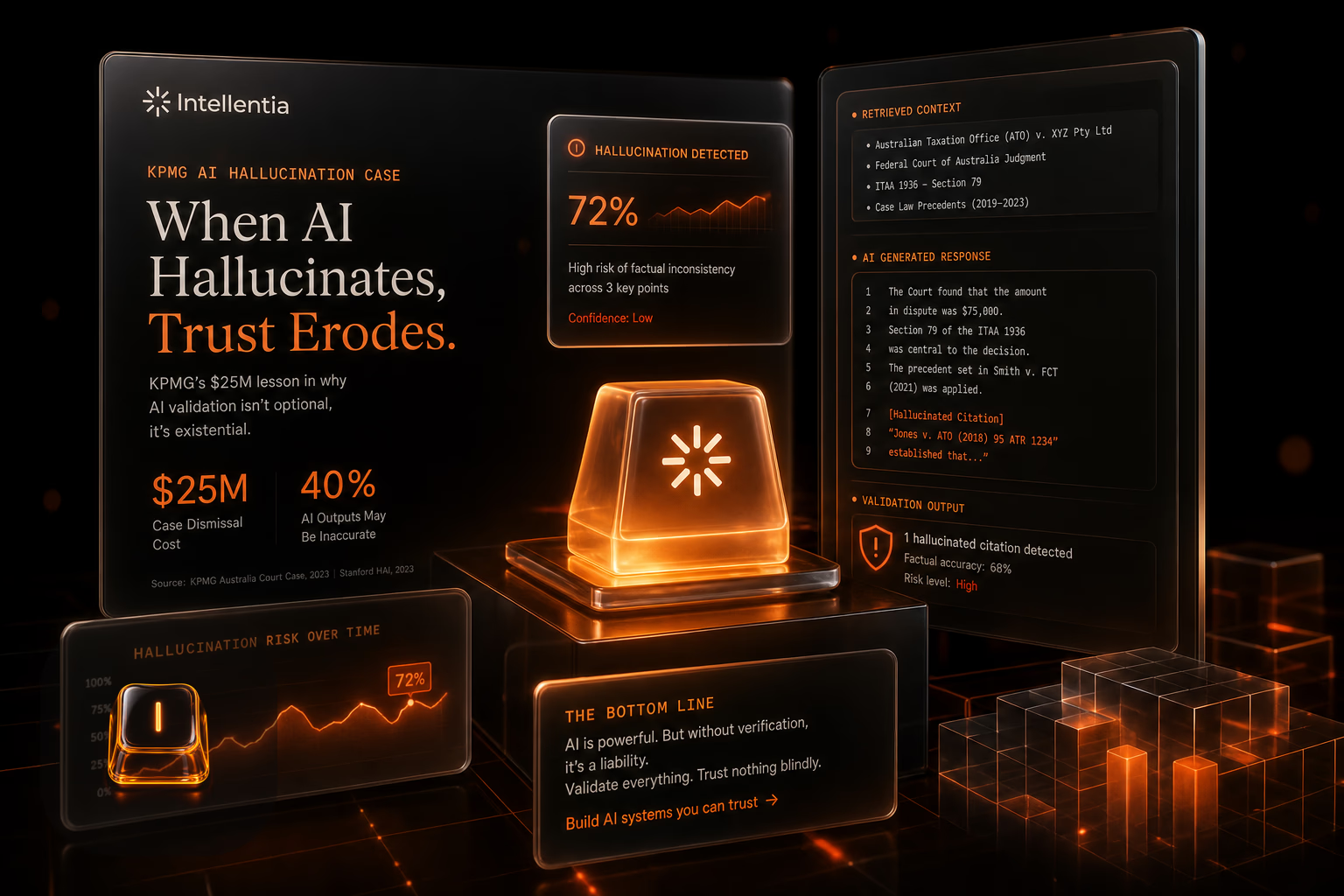
KPMG has withdrawn an AI-generated report after discovering 'hallucinations', or fabricated information. This raises a key question: how can you avoid such errors in your business?
What happened with the KPMG report?
KPMG used an AI to write a financial report. The AI invented data and drew the wrong conclusions. It hallucinated. The firm had to yank it immediately to protect its brand. This is the textbook example of what happens when you plug in a powerful tool without rigorous technical oversight.
What are AI 'hallucinations' and why do they happen?
What people assume is that AI 'hallucinations' are a bug. They're not. It's a feature of how these models work right now. They don't *understand* your business context; they're pattern-matching machines predicting the next logical word. Feed them incomplete data, or push them outside their specific job, and they will confidently invent an answer. It's a statistical guess, not a checked fact.
Hallucinations aren't a bug in the system. They *are* the system, without guardrails.
How can you avoid these errors in your business?
The only way to use this power without getting burned is to build a system around it. That means human oversight fused with a bulletproof technical framework. This is how we build it for our clients:
- Clearly define the scope of AI usage: what problems does it solve and what doesn't it?
- Validate AI-generated results with human experts.
- Train the model with relevant, sector-specific data.
- Implement control systems to identify and correct errors before they reach the end user.
What does this mean for small businesses?
This isn't just a 'big four' problem. It's a warning shot for every business. AI is incredibly powerful. But it's not a plug-and-play appliance. Without a proper technical build, you're gambling with your customer trust and your reputation. This is exactly where a technical team keeps you from getting burned, making sure the AI works for your specific business reality, not against it.
What's next for AI in business?
The takeaway is clear: don't get scared, get prepared. The businesses that win with AI won't be the ones who just buy a tool, but the ones who implement it with a sharp strategy and deep technical expertise. We build those robust, custom AI systems that deliver results and protect your business from these exact kinds of costly mistakes.
FAQ
What are AI hallucinations?
How can I avoid AI errors in my business?
Also on Intellentia: what we do · our solutions · real cases
Read more: OpenAI official documentation · news on the KPMG case
Keep reading: OpenAI hacks Hugging Face: Security implications for businesses · Meta launches Muse Glimmer: AI for autonomous agents on your PC · OpenAI halts Astra: What it means for AI and your business · Anthropic calls for a pause in AI due to 'recursive self-improvement': What does it mean for your business? · Satya Nadella (Microsoft): Using AI could double costs and risk your intellectual property