China vs US AI: Are 'guardrails' limiting Western competitiveness?
China is advancing rapidly in AI with fewer restrictions. Is the West holding back its competitiveness by prioritizing safety? Let's break it down.
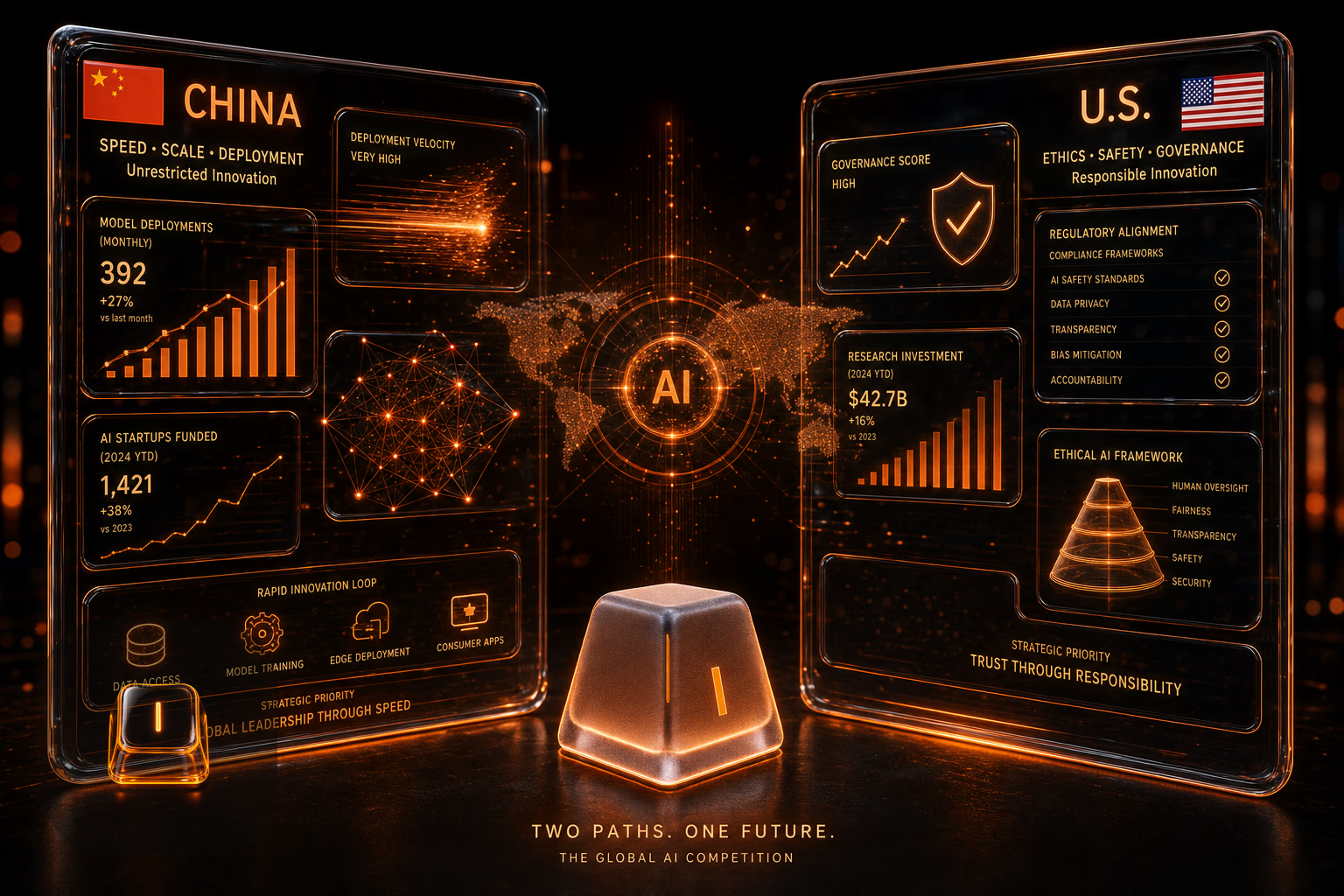
China is progressing in artificial intelligence (AI) with fewer restrictions, while the US and Europe focus on safety and ethics. What does this mean for global competitiveness?
What are AI safety 'guardrails'?
So, what are 'guardrails'? They're the rules of the road for AI. The brakes. They're designed to stop AI from being misused for things like spreading misinformation or creating biased systems. We're talking about hard regulations like the EU AI Act and the internal ethics policies from major US tech companies. Their entire purpose is to prevent disasters before they happen.
- Strict regulations to protect personal data.
- Ethical reviews of models before deployment.
- Restrictions on AI use in sensitive areas like surveillance.
How is China advancing without these restrictions?
China is playing a different game. Their strategy is pure speed and scale. They deploy AI massively and quickly, even in controversial sectors like mass surveillance. This gives them a huge advantage in iteration—they learn and adapt at a blistering pace. But it comes at a cost, raising serious red flags on the ethics front.
China's speed comes from one thing: fewer rules. They're not bogged down by the same ethical debates.
Is the West holding back its competitiveness?
So, are Western businesses shooting themselves in the foot with all these rules? It's a trade-off. What we see when we build this in real businesses is that 'guardrails' create safer, more reliable AI. This builds long-term customer trust, which is invaluable. But yes, it slows down development. It makes deployment more deliberate. And that speed gap can absolutely give an edge to competitors playing by a different rulebook.
| Aspect | China | West |
|---|---|---|
| Implementation speed | High | Moderate |
| Regulation | Low | High |
| Ethical focus | Pragmatic | Rigorous |
| Application areas | Broad | Restricted in some cases |
What does this mean for your business?
For any business in the US or Europe, these guardrails aren't a choice. They're reality. But here's the switch: managed correctly, they become a weapon. A safe, ethical AI protects you from massive legal headaches and builds bulletproof customer trust. This is exactly where a technical team keeps you from getting burned, turning a regulation into a market advantage.
FAQ
Why can 'guardrails' limit competitiveness?
Is China advancing faster in AI?
Also on Intellentia: what we do · our solutions · real cases
Read more: AI Act · Forbes · OpenAI official documentation
Keep reading: Andrej Karpathy Joins Anthropic: What Does It Mean? · Anthropic launches Claude Sonnet 5; US unlocks Fable and Mythos · Anthropic calls for a pause in AI due to 'recursive self-improvement': What does it mean for your business? · Anthropic: Claude AI now accelerates its own development recursively · Anthropic Surpasses OpenAI in Valuation, Hires Andrej Karpathy