AI vs Automation: Key Differences and How to Choose
AI and automation are often mentioned together, but they serve different purposes. Here’s a practical guide to understand and apply them effectively.
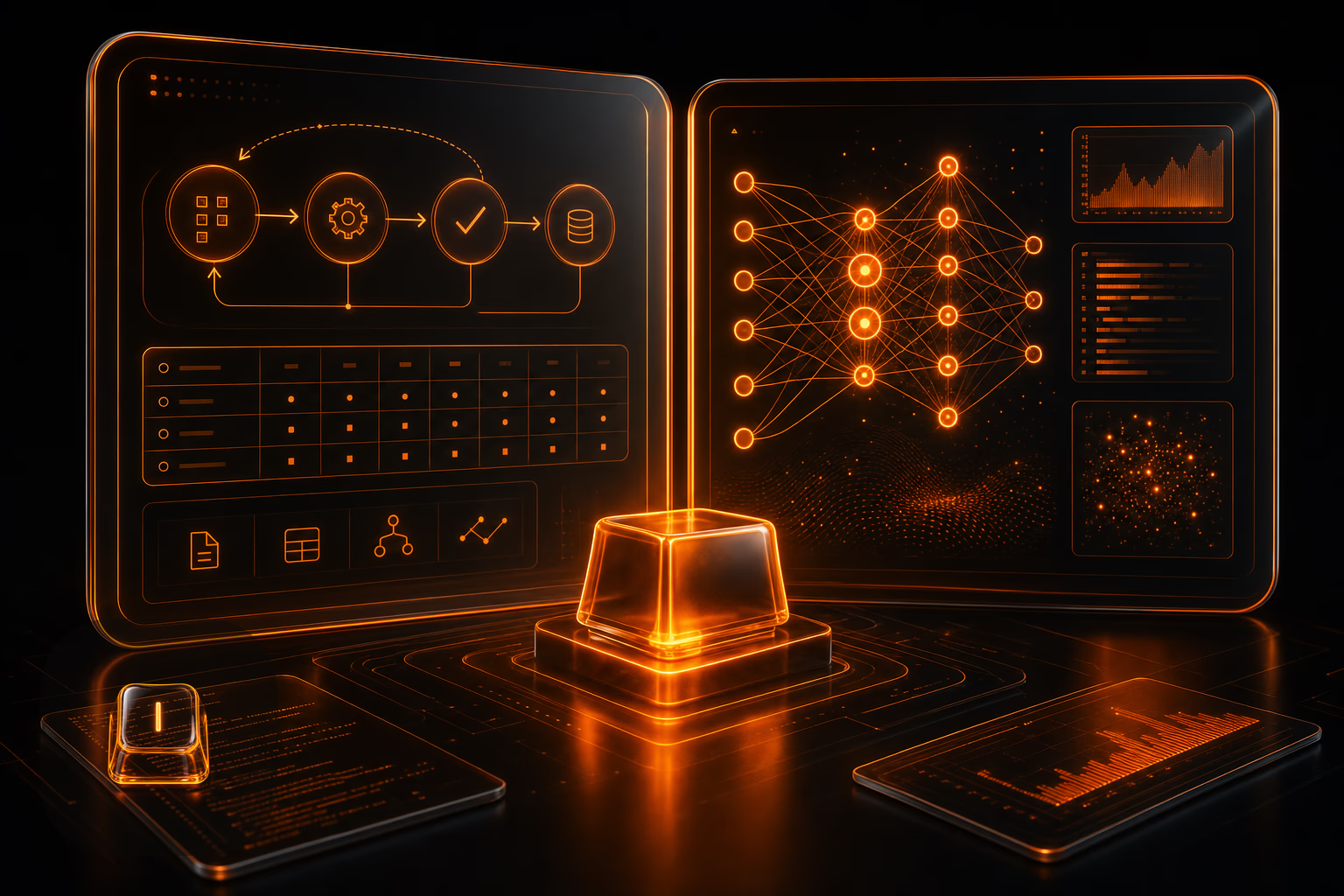
Understanding the difference between artificial intelligence (AI) and automation is essential to determine the right technology for your business.
What is automation and what problems does it solve?
Think of automation as a set of digital instructions. You define a rule—'if X happens, then do Y'—and the system executes it perfectly every single time, without getting tired or making typos. A classic example is the automated email that goes out after a customer makes a purchase. It's built for efficiency, taking repetitive, predictable tasks off your team's plate.
We see this applied constantly in retail for inventory alerts or in service businesses for invoicing and appointment reminders. The key is that the task is static and doesn't require judgment. Automation doesn't understand *why* it's doing something; it just follows the script you gave it. It's a workhorse, not a strategist.
What is artificial intelligence and when is it needed?
AI is a different beast entirely. Instead of following rigid 'if-then' rules, an AI system is designed to learn from data and make predictions or decisions. It's less like a script and more like a junior analyst you train. You feed it historical data, and it starts to identify patterns to solve problems that aren't black and white, like forecasting customer demand or personalizing product recommendations on the fly.
Take a hotel, for example. An automated system might lower prices every Tuesday because you told it to. An AI system, however, will analyze booking history, local events, flight schedules, and even weather forecasts to adjust pricing dynamically. It's not following a rule; it's running a continuous analysis to find the optimal price. That's the core difference: adaptation.
How can you determine which one your business needs?
What people ask us every week is, 'Which one do I need?' The answer starts with your process. Is the task repeatable, with clear rules and no exceptions? That's a textbook case for automation. But if the task requires interpreting context, dealing with unpredictable inputs, or making a judgment call based on messy data, you're in AI territory. Often, the most powerful solutions use both.
| Feature | Automation | AI |
|---|---|---|
| Requires data to learn | No | Yes |
| Handles repetitive tasks | Yes | Partially |
| Adapts decisions in real-time | No | Yes |
| Example | Automated email sending | Personalized recommendations |
Automation is the assembly line. AI is the quality control manager who learns to spot defects no one else can see. You need both.
What are common mistakes when choosing?
One of the biggest mistakes we see is over-engineering a solution. You don't need a complex AI model to run a simple FAQ chatbot that just matches keywords to canned answers; that's just a fancy automated script. But if you need that chatbot to understand customer frustration, decipher ambiguous questions, and learn from conversations to improve its answers, then simple automation will fall flat. You need AI.
The other classic misstep is diving into an AI project without a solid data foundation. An AI model is only as smart as the data it's trained on; 'garbage in, garbage out' is the absolute rule here. This is exactly why a proper data audit is the first step. Without it, you're just building on sand, and this is where a technical team keeps you from getting burned.
What does this mean for your business?
Ultimately, this isn't about picking the trendiest technology. It's about choosing the right tool for the job. A hammer isn't better than a screwdriver; they just do different things. A clear-eyed analysis of your actual business problem is what saves you money and ensures the technology actually drives results. We build these systems for businesses that want to solve specific operational challenges, without needing to build an in-house tech team to do it.
FAQ
Is AI always better than automation?
Can I combine AI and automation?
Also on Intellentia: what we do · our solutions · real cases
Read more: official AI documentation · definition of automation
Keep reading: Choosing a CRM Compatible with Intelligent Automation · What is AI System Architecture and How to Design It · Hidden Costs of AI Implementation in SMBs and How to Avoid Them · How to Start with AI in Your Business: A Practical Guide · What is Prescriptive Analytics and How to Use It in Retail